
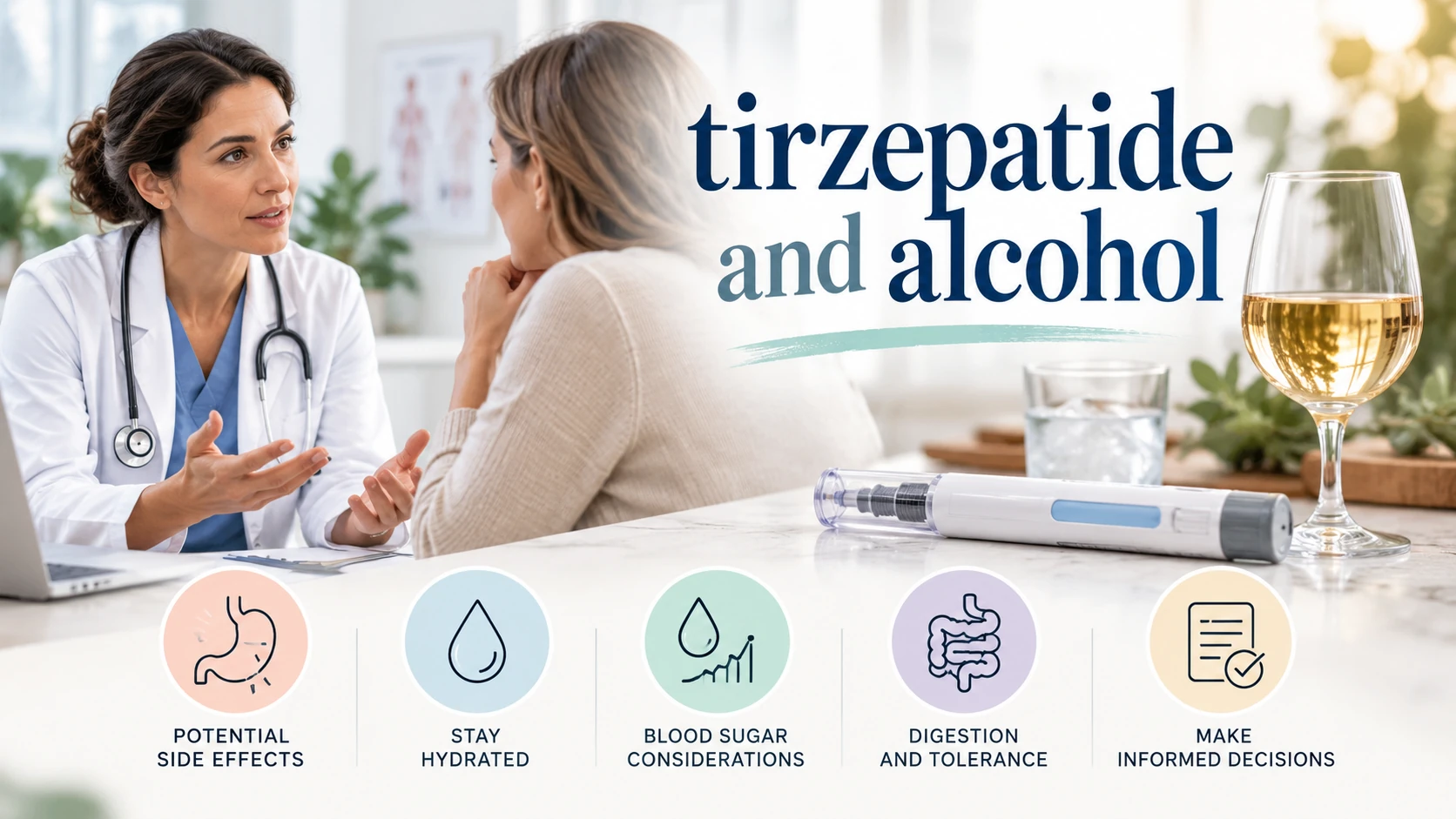
Most people can drink alcohol in moderation while taking tirzepatide, but the combination raises real risks like low blood sugar, stronger nausea, and dehydration.
New research even suggests tirzepatide may lower alcohol cravings on its own.
Here’s what actually happens when you mix the two, who should skip alcohol entirely, and how to drink more safely if you choose to.
Can You Drink Alcohol While Taking Tirzepatide?
Yes, most people can drink alcohol in moderation while taking tirzepatide.
There’s no direct chemical interaction that makes the two dangerous together the way some drug combinations are.
But alcohol can make tirzepatide’s common side effects worse, mess with your blood sugar, and slow down your progress, so moderation matters more than it might with other medications.
Tirzepatide carries a formal warning against alcohol on its label.
That doesn’t mean it’s a non-issue.
Alcohol is classified as a moderate interaction with tirzepatide, which means your doctor should know how much and how often you drink before you start or adjust your dose.
If you’re starting a tirzepatide treatment plan, this is exactly the kind of detail worth bringing up at your first visit.
What Happens When You Mix Tirzepatide and Alcohol?
Alcohol can intensify several of tirzepatide’s known side effects at once: it can swing your blood sugar in either direction, worsen nausea and stomach upset, speed up dehydration, and add to your pancreas’s workload.
None of these effects are guaranteed, but they become more likely the more you drink.
Blood Sugar Swings
Tirzepatide already helps regulate blood sugar, and alcohol changes how your liver processes glucose.
Together, they can cause unpredictable swings between low and high blood sugar, especially if you’re also managing insulin resistance or prediabetes.
This risk climbs even higher if you take insulin or another blood sugar lowering medication alongside tirzepatide.
Low blood sugar can also be hard to spot after a few drinks.
Its symptoms, like confusion, shakiness, and slurred speech, can look almost identical to being intoxicated, which makes it easy to miss a medical problem until it’s serious.
Worse Nausea and Digestive Upset
Tirzepatide slows down digestion, which is part of why it helps you feel full longer.
Alcohol irritates your stomach lining and can speed up or worsen the nausea, bloating, and reflux that already come with the medication, particularly during the first few weeks after a dose increase.
Dehydration and Dizziness
Alcohol is a diuretic, meaning it pulls fluid out of your body.
Tirzepatide can already cause mild dehydration through reduced appetite and occasional vomiting or diarrhea.
Combine the two and you’re more likely to feel lightheaded, get headaches, or feel unusually tired the next day.
Pancreatitis Risk
Heavy drinking is one of the most common causes of pancreatitis on its own, regardless of medication.
Some early research raised questions about whether GLP-1 based drugs like tirzepatide carry their own small pancreatitis risk, though larger studies have struggled to confirm a clear link between the drug class and the condition.
Still, if you already have risk factors like gallstones or a history of pancreatitis, stacking heavy alcohol use on top of tirzepatide is not a combination most providers will recommend.
Pancreatitis also shares early warning signs with ordinary stomach upset, severe pain, nausea, and vomiting, which makes it easy to brush off symptoms that actually need a same-day call to your provider.
Can Tirzepatide Actually Lower Your Alcohol Cravings?
Emerging research suggests tirzepatide may reduce how much you want to drink, not just how your body handles alcohol once it’s in your system.
Scientists think this happens because the drug dampens activity in the brain’s reward pathways, the same circuits that make alcohol feel rewarding in the first place.
In one 2026 study, researchers gave tirzepatide to rats and mice and found it cut binge-style drinking by more than 60 percent and blunted the dopamine spike that alcohol normally triggers in the brain.
A separate case report followed three adults with obesity and heavy alcohol use who started tirzepatide for diabetes or weight management.
None of them set out to drink less, yet their alcohol intake dropped by roughly half to nearly 98 percent within months, alongside improvements in their liver function tests.
Larger human trials are still underway, so this isn’t a reason to start tirzepatide specifically to drink less.
But it’s a meaningful data point if you’re already on the medication and notice your interest in alcohol fading on its own.
Who Should Avoid Alcohol Completely on Tirzepatide?
Certain patients should skip alcohol entirely while on tirzepatide rather than trying to moderate it.
This group mainly includes people managing unstable blood sugar, active liver or pancreas conditions, or a recent dose change, since these are exactly the situations where alcohol’s side effects overlap most with the medication’s own risks.
More specifically, this includes anyone who has:
- A history of pancreatitis or gallstone disease
- Diabetes that isn’t well controlled, or who takes insulin or other glucose lowering medications
- High triglycerides or existing liver disease
- Diabetic neuropathy or nerve damage
- A recent dose increase, since side effects are strongest in the first few weeks after a change
- A personal history of alcohol use disorder, where any drinking should be guided by a treatment plan, not a medication side effect
If any of these apply to you, it’s worth having a direct conversation with your provider about where alcohol fits, if anywhere, into your treatment plan.
How to Drink More Safely on Tirzepatide
If your provider has given you the go-ahead to drink in moderation, a few habits make it noticeably safer.
Eat Before You Drink
Having food in your stomach slows alcohol absorption and helps protect against both nausea and blood sugar drops.
Since tirzepatide already curbs your appetite, it’s easy to forget a meal before you drink, so treat it as a non-negotiable step rather than an afterthought.
Choose Lower-Sugar, Lower-Calorie Drinks
Sugary cocktails and mixers add calories that work against your weight loss goals and can cause bigger blood sugar swings.
Dry wine, light beer, or spirits with a zero-sugar mixer are gentler options than sweet cocktails or sugary seltzers.
Pace Yourself and Stay Hydrated
Alternate alcoholic drinks with water, and keep your total intake to one drink at a time rather than several in a row.
This gives your body more time to process the alcohol and reduces the dehydration risk that tirzepatide can already contribute to.
Know the Warning Signs
Stop drinking and contact your provider if you notice severe abdominal pain, repeated vomiting, confusion, a racing heartbeat, or shakiness that doesn’t improve after eating something.
These can be signs of low blood sugar, dehydration, or a more serious complication that needs medical attention right away.
Does Alcohol Affect How Well Tirzepatide Works for Weight Loss?
Yes, regular drinking can slow your weight loss progress on tirzepatide.
Alcohol is calorie-dense, often triggers extra snacking, and can interfere with how efficiently your body burns fat, all of which work against the results the medication is designed to help you achieve.
This doesn’t mean an occasional drink will undo your progress.
It means frequent or heavy drinking can quietly chip away at results over time, which is one reason a medical weight loss program typically includes regular check-ins rather than just a prescription.
Part of the reason comes down to how your liver prioritizes what it burns for fuel.
Once alcohol enters your system, your liver shifts to processing it first, and research dating back decades has found this can reduce how much fat your body burns by over a third for several hours afterward.
Tirzepatide can’t override that shift, so the more often it happens, the more it works against the fat loss the medication is designed to support.
Tracking changes with a body composition scan can also help you and your provider spot early signs that alcohol, rather than the medication, is behind a plateau.
How AZ Wellness Center Helps You Use Tirzepatide Safely
At AZ Wellness Center in Mesa, Arizona, we don’t just hand patients a prescription and send them on their way.
Every tirzepatide plan starts with a full metabolic evaluation so we understand your health history, including your relationship with alcohol, before we ever talk about dosing.
From there, our team builds a plan around you.
For some patients, that means semaglutide may fit better than tirzepatide.
For others, tirzepatide paired with ongoing obesity management support is the right fit.
Either way, we check in regularly so side effects, including anything related to alcohol, get caught early rather than becoming a bigger problem.
If you live in Mesa or anywhere in the greater Phoenix area and you’re weighing tirzepatide against your lifestyle, including how it fits with your current drinking habits, our team can walk through it with you in plain language before you start.
You can book a consultation to go over your health history and get a plan that actually fits your life, not just a prescription pad.
FAQs
Can I drink alcohol while taking tirzepatide?
Most people can drink alcohol in moderation while taking tirzepatide, since there’s no direct chemical interaction between the two. Alcohol can still worsen side effects like nausea and blood sugar swings, so it’s worth checking with your provider about what moderation looks like for you specifically.
Does alcohol make tirzepatide side effects worse?
Yes, alcohol can intensify common tirzepatide side effects like nausea, dizziness, and dehydration. It can also make blood sugar harder to control, which is why many providers recommend limiting alcohol, especially in the first few weeks after starting or increasing your dose.
Will alcohol stop tirzepatide from working?
Occasional drinking is unlikely to stop tirzepatide from working, but frequent or heavy alcohol use can slow your weight loss progress. Alcohol adds extra calories and can interfere with fat burning, which works against what the medication is helping your body do.
How long after my injection should I wait to drink?
There’s no official waiting period between a tirzepatide injection and drinking alcohol. Many providers suggest waiting until any nausea or stomach upset from the injection has settled, and eating a full meal first, before having a drink.
Can tirzepatide help me drink less?
Early research suggests tirzepatide may reduce alcohol cravings for some people by affecting the brain’s reward pathways. This effect is still being studied in larger human trials, so it shouldn’t be the main reason someone starts the medication, but it’s a welcome side benefit some patients notice.
What warning signs mean I should stop drinking and call my provider?
Stop drinking and call your provider if you experience severe abdominal pain, repeated vomiting, confusion, a racing heartbeat, or shakiness that doesn’t go away after eating. These can signal low blood sugar, dehydration, or a more serious complication.