
The potential benefits of ketamine include faster improvement in depressive symptoms, relief for some people with treatment-resistant depression, support for neuroplasticity, and possible reductions in anxiety and post-traumatic stress disorder symptoms.
Some patients notice changes within hours or days rather than waiting several weeks for a traditional antidepressant to take effect.
However, ketamine therapy does not work for everyone, results may be temporary, and repeated treatments or ongoing mental health care may be needed.
Let’s dive into what these benefits are, and whether ketamine therapy may be right for you.
Ketamine Benefits at a Glance
Potential ketamine therapy benefits include:
- Faster improvement in depressive symptoms
- Another option when previous depression treatments have not helped enough
- Short-term reduction in suicidal thoughts for some patients
- Support for neuroplasticity and new neural connections
- Possible relief from persistent anxiety symptoms
- Potential improvement in PTSD symptoms
- Greater flexibility and engagement during psychotherapy
- Improvements in motivation, daily functioning, and quality of life
Ketamine has also been studied for certain chronic pain conditions.
The strength of evidence varies by condition, and each potential benefit must be considered alongside the treatment’s risks and limitations.
What Is Ketamine Therapy?
Ketamine is a dissociative anesthetic that has been used in medical settings for decades.
At lower, sub-anesthetic doses, it may produce rapid antidepressant and pain-modulating effects.
Ketamine is approved in the United States as an anesthetic.
Its use through IV infusions for depression, anxiety, PTSD, and chronic pain is considered off-label, meaning the medication is being prescribed for a purpose outside its original approved indication.
Off-label prescribing is permitted when a qualified provider determines that it is medically appropriate for a particular patient.
Ketamine therapy may be delivered in several forms, including intravenous, intramuscular, oral, and intranasal treatment.
This article focuses primarily on medically supervised IV ketamine therapy.
What Are the Main Benefits of Ketamine Therapy?
Let’s look at some of the main benefits of Ketamine therapy:
1. Ketamine May Work Faster Than Traditional Antidepressants
One of the most widely discussed ketamine benefits is its potential speed.
Traditional antidepressants often need to be taken daily for several weeks before their full effects can be evaluated.
Some people receiving ketamine experience an improvement in depressive symptoms within hours or days.
Early changes may be subtle.
A patient may notice:
- Less emotional heaviness
- Quieter negative thoughts
- Greater interest in daily activities
- More motivation to complete basic tasks
- A sense of hope or mental flexibility
- An improved ability to participate in therapy
Not everyone responds after one session.
Some patients need several treatments before noticing meaningful changes, while others may not experience sufficient improvement.
2. Ketamine May Help With Treatment-Resistant Depression
Ketamine is most strongly associated with the treatment of treatment-resistant depression.
This generally refers to depression that has not improved enough after appropriate trials of conventional treatments.
A person with treatment-resistant depression may have tried several medications, psychotherapy, lifestyle changes, or combinations of treatments without achieving adequate relief.
Ketamine works through different pathways than most conventional antidepressants.
Instead of primarily targeting serotonin or norepinephrine, it affects glutamate signalling in the brain.
This different mechanism may help explain why some patients respond to ketamine after other treatments have not worked.
Ketamine does not necessarily replace a patient’s current treatment.
Depending on the individual, it may be incorporated into a broader care plan involving psychotherapy, medication management, sleep support, stress management, and other mental health services.
3. Ketamine May Temporarily Reduce Suicidal Thoughts
Research suggests that ketamine may rapidly reduce suicidal thoughts in some people with severe depression.
The effect may begin within hours or days, although its duration varies and the reduction may be temporary.
This potential benefit should be interpreted carefully.
Research has primarily evaluated changes in suicidal thoughts, not whether ketamine prevents future suicide attempts or provides lasting protection against suicidal behaviour.
Ketamine is not a replacement for emergency psychiatric care or a complete suicide-prevention plan.
Anyone facing an immediate risk of suicide or self-harm should contact emergency services or go to the nearest emergency department.
4. Ketamine May Support Neuroplasticity
Neuroplasticity is the brain’s ability to adapt, reorganize, and form new connections.
Depression, trauma, and chronic stress can contribute to rigid patterns of thinking, emotion, and behaviour.
Ketamine affects glutamate signalling and NMDA receptors.
It may also activate biological processes involved in creating and strengthening connections between nerve cells.
This process is sometimes described as synaptogenesis.
In practical terms, increased neuroplasticity may create a period when some patients feel more capable of:
- Considering a situation from a different perspective
- Interrupting repetitive negative thoughts
- Adopting healthier coping strategies
- Engaging in psychotherapy
- Changing established habits or behaviours
Ketamine does not erase difficult memories or permanently rewire the brain after one treatment.
It may create a temporary opportunity for change, but the support and choices surrounding treatment still matter.
5. Ketamine May Reduce Anxiety Symptoms
Ketamine may provide relief from persistent anxiety symptoms in some patients, including people whose anxiety has not improved with conventional treatment.
Potential changes may include:
- Less repetitive or catastrophic thinking
- Reduced emotional reactivity
- Fewer feelings of dread
- Greater mental flexibility
- Improved ability to participate in daily activities
- Reduced anxiety alongside depressive symptoms
Research into ketamine for treatment-resistant anxiety is promising, but the evidence is not as established as it is for treatment-resistant depression.
Studies also vary in the anxiety disorders treated, the treatment protocols used, and the duration of follow-up.
Ketamine should not automatically be viewed as a first-line treatment for anxiety.
A provider must consider the patient’s diagnosis, previous treatments, health history, and overall care plan.
6. Ketamine May Help Reduce PTSD Symptoms
Ketamine is also being studied as a possible treatment for post-traumatic stress disorder.
Some research has found early improvements in PTSD and depression symptoms, including changes that appeared within a day of treatment.
Potential areas of improvement may include:
- Intrusive thoughts
- Persistent fear or hyperarousal
- Emotional numbness
- Avoidance
- Negative beliefs or thought patterns
- Depression associated with trauma
The current evidence is promising but still developing.
Reviews have found that ketamine may reduce certain PTSD symptoms, while also noting that larger studies are needed to clarify who benefits, how long the effects last, and which protocols are most effective.
PTSD treatment often requires more than symptom reduction.
Trauma-informed psychotherapy and ongoing support may still be needed to process experiences safely and develop strategies for managing triggers.
7. Ketamine May Support Engagement in Psychotherapy
Some patients report feeling less guarded, less emotionally overwhelmed, or less trapped in familiar thought patterns during the period surrounding ketamine treatment.
This may make it easier to explore emotions, memories, behaviours, and personal goals during psychotherapy.
The increase in psychological flexibility may also help some patients consider alternative perspectives.
Research into the combination of ketamine and psychotherapy is encouraging, but it remains difficult to determine how much of the improvement comes from ketamine, psychotherapy, the treatment environment, or a combination of these factors.
A systematic review found that combined treatment showed promise across several psychiatric conditions.
However, differences between study designs, therapy methods, ketamine protocols, and patient groups prevented firm recommendations about the best way to integrate the two treatments.
Patients interested in combined treatment should work with qualified professionals who understand both ketamine therapy and the mental health condition being treated.
8. Ketamine May Improve Daily Functioning and Quality of Life
Depression affects more than mood.
It can interfere with concentration, relationships, work, self-care, motivation, and the ability to experience pleasure.
When ketamine reduces depressive symptoms, some people may find it easier to:
- Complete daily responsibilities
- Communicate with friends and family
- Return to hobbies
- Participate in therapy
- Follow healthy routines
- Make decisions
- Experience interest or enjoyment
- Work toward personal goals
Research has associated ketamine and esketamine treatment with improvements in quality-of-life measures among adults with major depression or treatment-resistant depression.
However, the amount and duration of improvement vary.
Progress may happen gradually.
A patient may first notice that a basic task feels more manageable before experiencing a broader change in mood.
Can Ketamine Therapy Help With Chronic Pain?
Ketamine may help selected patients with certain difficult-to-treat chronic pain conditions.
It affects NMDA receptors involved in pain signalling and may reduce central sensitization, a process in which the nervous system becomes increasingly responsive to pain signals.
Ketamine has been studied for conditions such as:
- Neuropathic pain
- Complex regional pain syndrome
- Fibromyalgia
- Certain forms of persistent postsurgical pain
- Chronic pain that has not responded adequately to conventional treatment
The evidence varies considerably by condition, dose, treatment duration, and method of administration.
Some studies have found improvements in pain interference and daily function, while other reviews have found limited or low-certainty evidence.
Ketamine should not be presented as a universal treatment for chronic pain.
It is generally considered within a broader pain-management plan after a detailed medical evaluation.
How Does Ketamine Therapy Work?
Ketamine primarily affects glutamate, one of the brain’s most important chemical messengers.
Glutamate is involved in learning, memory, mood regulation, and communication between nerve cells.
Ketamine blocks certain NMDA receptors while influencing additional pathways connected to neural growth and communication.
These changes may help nerve cells form or strengthen synaptic connections.
This mechanism differs from many conventional antidepressants, which primarily affect serotonin, norepinephrine, or dopamine.
Researchers are still studying exactly how ketamine produces its antidepressant effects.
Its benefits likely result from several biological and psychological processes rather than one receptor or chemical change.
Which Conditions Have the Strongest Evidence?
The strength of evidence is not equal across every condition associated with ketamine therapy.
| Condition | Current evidence | Potential benefit | Important limitation |
|---|---|---|---|
| Treatment-resistant depression | Strongest psychiatric evidence | Rapid reduction in depressive symptoms for some patients | The response may fade, and repeated treatment may be needed |
| Major depressive episodes | Substantial and growing | Possible improvements in mood, motivation, and functioning | Not everyone responds |
| Suicidal thoughts associated with depression | Supports a rapid, short-term effect in some patients | May temporarily reduce the intensity of suicidal thinking | Does not replace emergency or ongoing suicide-prevention care |
| Anxiety disorders | Emerging | May reduce persistent or treatment-resistant anxiety symptoms | Evidence is less established than it is for depression |
| PTSD | Promising but developing | May reduce selected trauma-related symptoms | Long-term effectiveness remains uncertain |
| Ketamine combined with psychotherapy | Early and developing | May support flexibility and engagement in treatment | The added benefit of psychotherapy has not been firmly established |
| Chronic pain | Condition-specific | May reduce pain or pain interference in selected patients | Results and protocols vary considerably |
| Bipolar depression and OCD | Limited and diagnosis-specific | May benefit selected patients under specialist care | Requires careful screening and further research |
A qualified provider should evaluate the specific condition rather than assuming ketamine is equally effective for every psychiatric or pain-related concern.
How Quickly Does Ketamine Therapy Work?
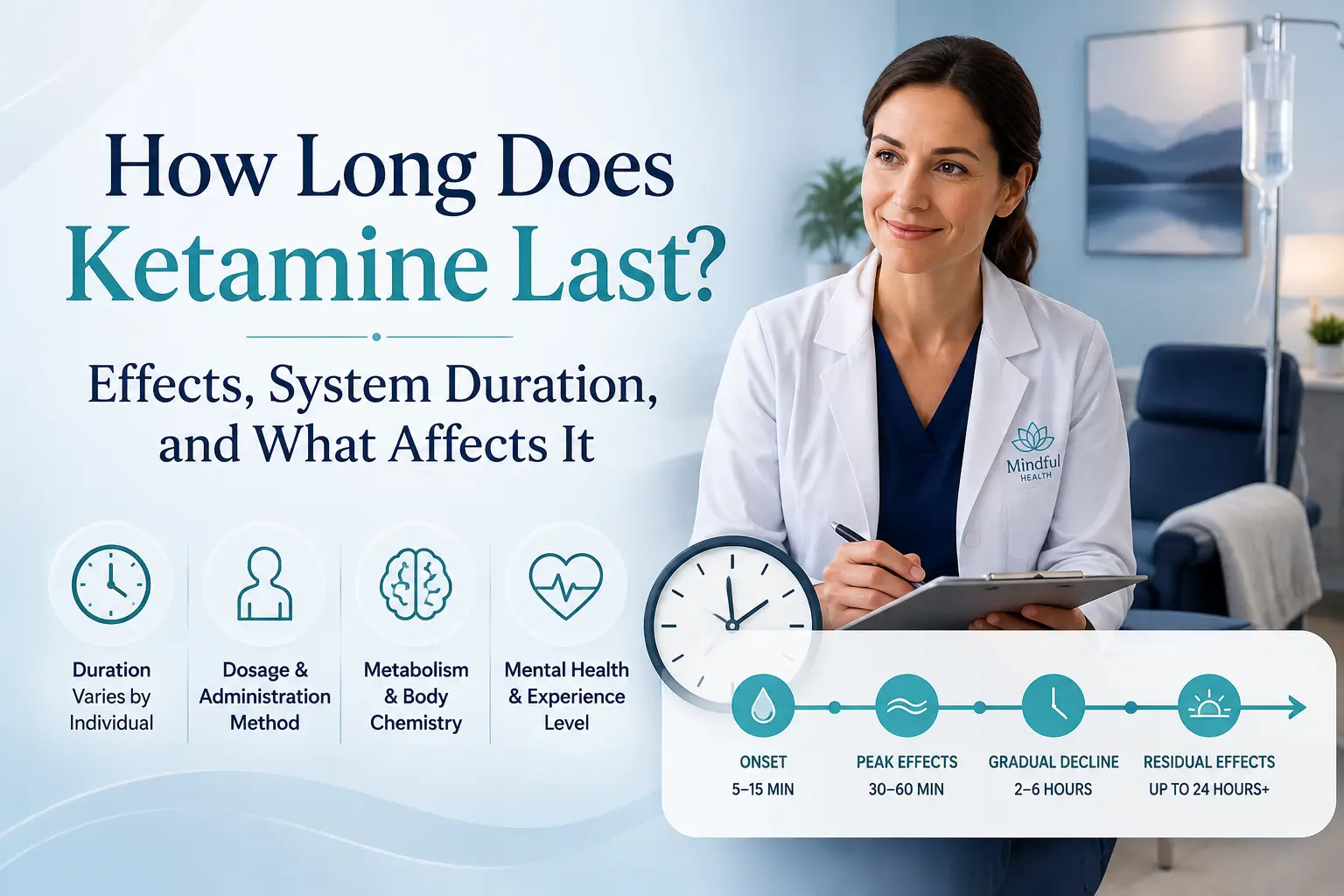
Some patients notice a change within hours or a few days of treatment.
Others need several sessions before experiencing meaningful improvement.
The first signs that ketamine may be helping are not always dramatic.
A patient might initially notice:
- Less intense negative thinking
- Reduced emotional heaviness
- Greater interest in normal activities
- Improved motivation
- Increased willingness to connect with others
- A greater ability to imagine improvement
A lack of immediate relief after one session does not necessarily mean the treatment will not help.
Providers typically assess response across the planned initial treatment period rather than judging the outcome from a single appointment.
How Long Do Ketamine Benefits Last?
Ketamine benefits may last from several days to several weeks after a treatment.
The duration varies based on the condition being treated, the patient’s individual response, and the treatment protocol.
Repeated sessions may help extend the response.
Some patients later receive maintenance treatments at longer intervals, although no single schedule is appropriate for everyone.
Factors that may affect the duration of improvement include:
- Diagnosis and symptom severity
- Response to the initial treatments
- Dose and treatment frequency
- Other medications
- Physical and mental health conditions
- Psychotherapy and ongoing support
- Sleep and daily routines
- Alcohol or substance use
- Current stress levels
Ketamine should not be described as a permanent cure for depression, anxiety, PTSD, or chronic pain.
Even after meaningful improvement, symptoms may return.
Ketamine Therapy vs. Traditional Antidepressants
Ketamine and traditional antidepressants can both play a role in depression treatment, but they differ in several important ways.
| Factor | IV ketamine therapy | Traditional antidepressants |
| Main pathway | Primarily affects glutamate-related signalling | Often affects serotonin, norepinephrine, or dopamine |
| Potential onset | Hours or days for some patients | Commonly several weeks |
| Administration | Given during scheduled treatment sessions | Usually taken daily |
| Common treatment role | Often considered after previous treatments have not provided enough relief | Frequently used as an initial treatment |
| Treatment environment | Administered with professional monitoring | Usually taken at home after being prescribed |
| Duration | May require an initial series and maintenance sessions | Often requires continued daily use |
| Individual response | Not everyone responds | Not everyone responds |
Ketamine and antidepressants are not always an either-or choice.
Some patients continue taking prescribed medications while receiving ketamine under the direction of their healthcare providers.
Patients should not stop or change psychiatric medications without speaking with the professional who prescribed them.
What Are the Risks and Side Effects of Ketamine Therapy?
Ketamine therapy has potential benefits, but it is not risk-free.
Medical screening and monitoring matter because ketamine can temporarily affect awareness, perception, coordination, blood pressure, and heart rate.
Common Short-Term Side Effects
Possible effects during or shortly after a session include:
- Dissociation or feeling detached
- Dizziness or lightheadedness
- Nausea or vomiting
- Blurred or double vision
- Drowsiness
- Temporary anxiety
- Changes in the perception of time or surroundings
- Increased blood pressure
- Difficulty concentrating or coordinating movement
These effects usually improve as the medication wears off, but the experience varies from one patient to another.
Risks Associated With Repeated or Unsupervised Exposure
Bladder injury, liver problems, cognitive effects, tolerance, misuse, and dependence are more commonly associated with repeated, prolonged, high-dose, or unsupervised ketamine exposure.
These risks do not appear to be equally common during a carefully monitored clinical treatment series.
However, providers should still use cautious dosing, screen for substance-use concerns, and monitor patients receiving ongoing treatment.
The FDA has also warned about potential risks associated with compounded ketamine products used for psychiatric conditions, particularly oral products taken at home without direct professional monitoring.
Compounded medications are not reviewed through the same process as approved drug products for safety, effectiveness, and quality.
Who May Be a Candidate for Ketamine Therapy?
Ketamine may be considered for adults who continue to experience significant symptoms after trying conventional treatments.
A potential candidate may have:
- Treatment-resistant depression
- A major depressive episode that has not improved adequately
- Certain persistent anxiety symptoms
- PTSD symptoms that have not responded to established treatments
- A selected chronic pain condition
- The ability to participate in screening and follow-up care
- Safe transportation and support after each session
Candidacy cannot be determined from symptoms alone.
A provider should review the patient’s diagnosis, current medications, treatment history, physical health, mental health history, substance use, and personal goals.
What Does Ketamine Therapy Feel Like?
The experience differs from person to person.
During a low-dose ketamine infusion, a patient may feel relaxed, dreamlike, light, or temporarily detached from their surroundings.
Some people experience:
- A floating sensation
- Changes in their perception of time
- Increased awareness of sounds or colors
- Visual patterns with closed eyes
- A sense of observing thoughts from a distance
- Emotional memories or insights
- Temporary difficulty speaking or concentrating
Other patients may feel anxious, disoriented, dizzy, or nauseated.
The experience during an infusion does not always indicate whether the treatment will ultimately be effective.
A more intense experience is not necessarily a better one.
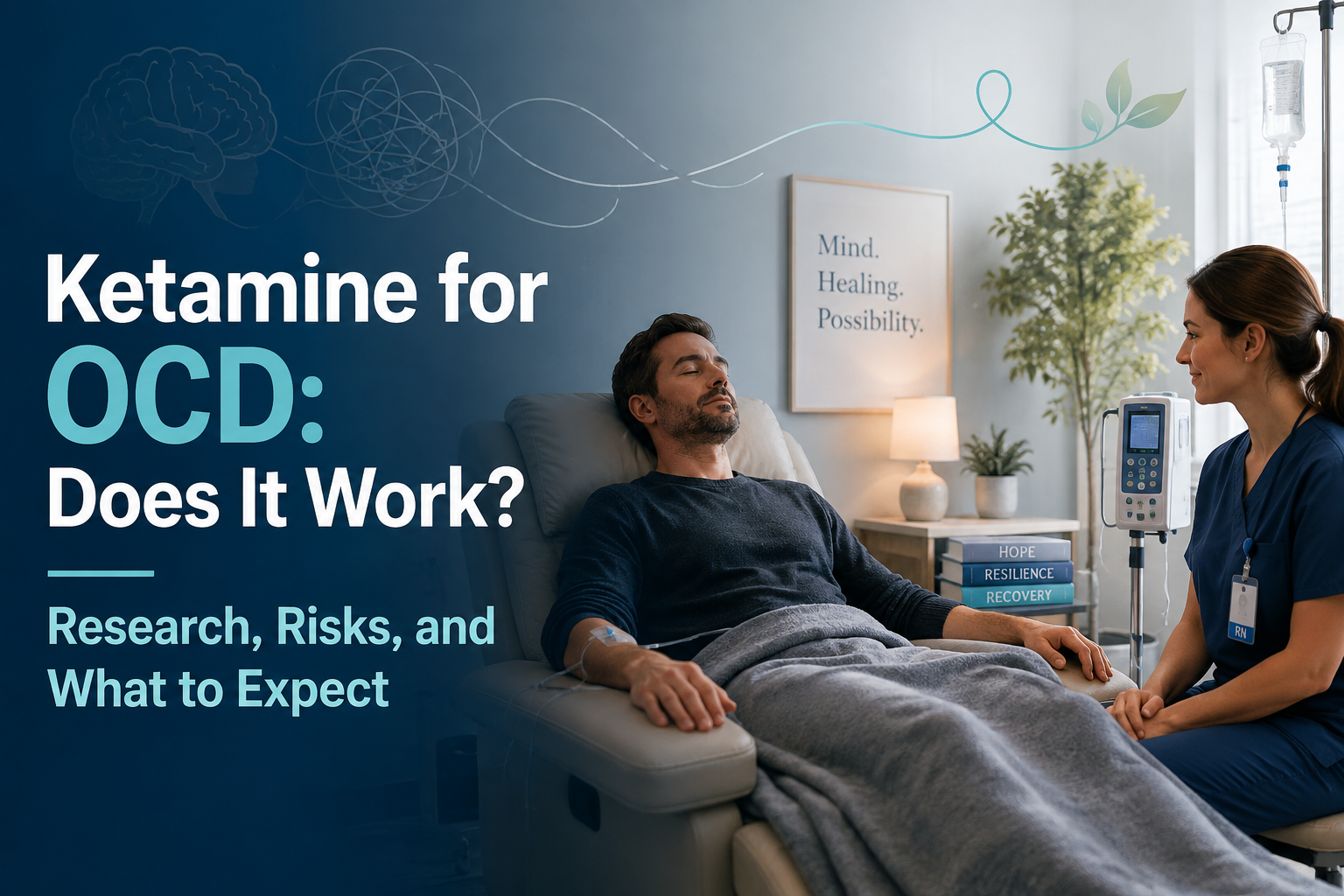
What Happens During an IV Ketamine Infusion?
The process usually begins with a consultation and medical evaluation.
The provider reviews the patient’s symptoms, treatment history, current medications, health conditions, and possible risk factors.
During an IV ketamine session:
- The patient settles into a quiet treatment area.
- A healthcare professional places an IV.
- Ketamine is administered gradually at a carefully selected dose.
- The clinical team monitors the patient throughout the infusion.
- The patient remains at the clinic while the immediate effects begin to wear off.
- A responsible adult drives the patient home.
Patients should generally avoid driving, operating machinery, making major decisions, or returning to work immediately after treatment.
Transportation should be arranged before the appointment.
The number and timing of sessions depend on the patient’s condition, response, tolerance, and individualized treatment plan.
Is Ketamine the Same as Esketamine?
Ketamine and esketamine are closely related, but they are not the same treatment.
Ketamine contains two mirror-image forms of the molecule.
Esketamine contains one of those forms and is administered as a nasal spray under a specific clinical protocol.
Current FDA labelling indicates that esketamine nasal spray can be used for treatment-resistant depression in adults as monotherapy or with an oral antidepressant.
It is also indicated with an oral antidepressant for depressive symptoms in adults with major depressive disorder and acute suicidal ideation or behaviour.
The label states that it has not been shown to prevent suicide or reduce suicidal behaviour itself.
IV ketamine for psychiatric conditions remains an off-label treatment.
The two options have different administration methods, monitoring requirements, protocols, and insurance considerations.
Ketamine Therapy at AZ Wellness Center in Arizona
AZ Wellness Center offers IV ketamine therapy in Mesa, Arizona, for patients who may be dealing with treatment-resistant depression, anxiety, PTSD, chronic pain, and related concerns.
The consultation process provides an opportunity to discuss previous treatments, medical history, current symptoms, potential risks, and realistic goals.
If ketamine is appropriate, treatment can be planned and monitored within a clinical setting.
Ketamine treatment should begin with a careful evaluation rather than an assumption that it will work for every patient.
A consultation can help determine whether IV ketamine is an appropriate part of a broader care plan.
Understanding the Potential Benefits of Ketamine
The potential benefits of ketamine have made it an important treatment to consider when depression or related symptoms have not improved with conventional care.
Its rapid effects, different mechanism of action, and influence on neuroplasticity may provide meaningful relief for some patients.
Ketamine may also help selected people with anxiety, PTSD, or chronic pain, although the strength of evidence differs across these conditions.
Ketamine is not a universal solution.
Benefits may be temporary, side effects can occur, and treatment requires careful screening and monitoring.
An individualized evaluation can help determine whether ketamine is appropriate for a patient’s symptoms, health history, and treatment goals.
FAQs: Ketamine Benefits
How fast does ketamine therapy work?
Some patients notice changes within hours or a few days. Others need several sessions before experiencing meaningful improvement. The speed of response depends on the condition, symptom severity, treatment protocol, and individual patient.
How long do ketamine benefits last?
Ketamine benefits may last for several days or weeks after a treatment. Some patients later receive maintenance sessions, while others use psychotherapy, medication management, and additional care to help sustain their progress.
Can ketamine help with anxiety?
Ketamine may reduce anxiety symptoms in some patients, particularly when those symptoms have not responded to conventional treatment. However, the evidence for anxiety is less established than the evidence for treatment-resistant depression.
Can ketamine help with PTSD?
Research suggests ketamine may reduce certain PTSD symptoms, but the evidence is still developing. It may be considered as part of a broader trauma-informed treatment plan rather than a replacement for psychotherapy and ongoing support.
How many ketamine sessions are needed?
There is no universal number of sessions. Some treatment plans begin with an initial series and then evaluate whether less frequent maintenance treatment is appropriate. The schedule should be based on response, tolerability, diagnosis, and treatment goals.
Is ketamine therapy safe?
Ketamine can be administered safely in an appropriate clinical environment, but it has potential side effects and risks. Patients should be medically screened, monitored during treatment, and given clear instructions for transportation and recovery.
Can ketamine be used for OCD?
Ketamine is being studied as a possible treatment for obsessive-compulsive disorder, particularly when standard treatments have not provided enough relief. Some small studies have reported temporary reductions in obsessive thoughts, but the evidence remains limited and inconsistent. Ketamine is not considered a standard first-line treatment for OCD, and more controlled research is needed to determine who may benefit and how long improvements last.
Can ketamine help with migraines?
Ketamine may reduce migraine pain or aura symptoms in some people with severe, treatment-resistant migraines. However, research has produced mixed results, and the benefits may depend on the dose, administration method, and type of migraine. Ketamine is not generally a first-line migraine treatment and should only be considered after a medical evaluation when established options have not provided sufficient relief.