
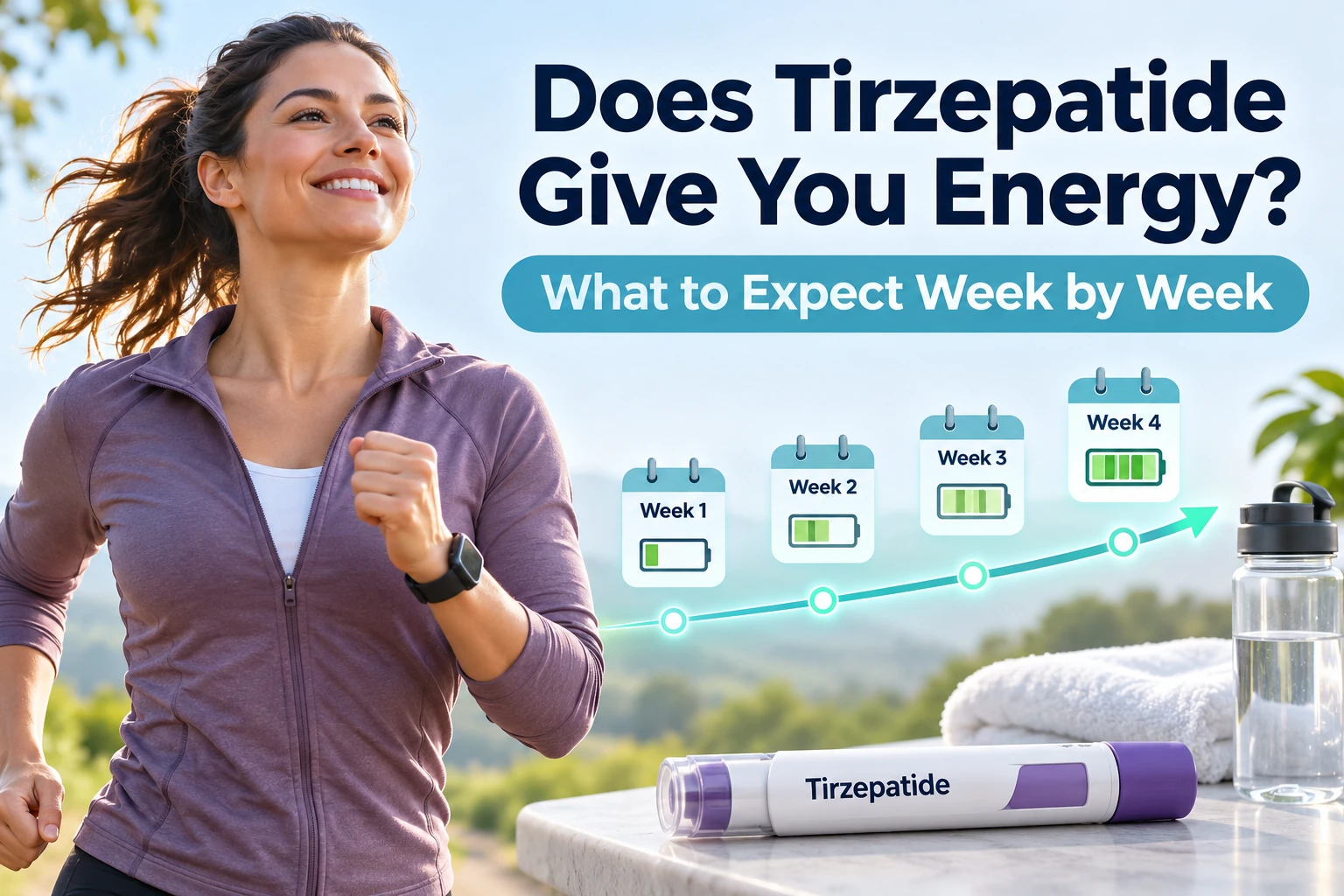
Tirzepatide is not a stimulant, so it will not give you an instant jolt of energy.
Many people actually feel more tired during the first one to three weeks as their body adjusts.
After that, energy usually climbs as blood sugar stabilizes, sleep improves, and the body starts burning fuel more efficiently.
Most people notice a real difference by week four to eight.
If you started tirzepatide expecting a burst of energy and instead feel wiped out, you are not imagining it.
It is also true that plenty of people report feeling more energetic than they have in years once their body settles in.
Both experiences are common, and the question of does tirzepatide give you energy really comes down to timing.
Tirzepatide changes how your body uses fuel, and that process takes a few weeks to show up as extra energy instead of extra fatigue.
Here is what is actually happening inside your body, how long the adjustment usually lasts, and what to do if your energy still has not bounced back.
Does Tirzepatide Give You Energy?
Tirzepatide does not work like caffeine or a stimulant, so it will not give you an instant jolt of energy.
Instead, it changes how your body manages blood sugar and burns fuel, which can lead to steadier, more consistent energy over several weeks, though many people feel more tired than usual at first.
That delay is the part most people are not warned about.
The medication is working on your metabolism long before you feel it in your energy levels, which is why the first month can feel like the opposite of what you expected.
Why Might Tirzepatide Leave You Tired at First?
Early fatigue on tirzepatide is usually caused by a sharp drop in calorie intake, mild dehydration from nausea or an upset stomach, and your body adjusting to steadier blood sugar instead of the highs and lows it is used to.
None of these usually mean the medication is not working.
Fatigue is one of the most commonly reported side effects in clinical trials of tirzepatide.
According to a review of clinical data, fatigue showed up in roughly 5 to 7 percent of people taking the medication, compared with about 3 percent of people on a placebo.
The U.S. Food and Drug Administration lists fatigue among the adverse reactions reported in at least 5 percent of patients in its official prescribing information for the drug.
A big part of the problem is simple math.
When your appetite drops this fast, your body is suddenly running on far fewer calories than before, and it can respond by slowing down to conserve energy.
Add in nausea or loose stools, which pull fluid and electrolytes out of your system, and tiredness becomes an easy side effect to pick up during the first few weeks.
How Does Tirzepatide Improve Energy Over Time?
Tirzepatide tends to improve energy over time by stabilizing blood sugar, helping your body burn fat more efficiently, activating metabolically active fat tissue, and improving sleep quality in people with obesity-related sleep apnea.
Together, these changes often show up as steadier daytime energy within a couple of months.
Steadier Blood Sugar, Steadier Energy
Big swings in blood sugar are one of the most common, overlooked causes of daytime fatigue.
A spike followed by a crash leaves you reaching for coffee or a nap.
Tirzepatide works on two hormone pathways, GIP and GLP-1, that improve insulin sensitivity and help the body respond to food more smoothly instead of lurching between highs and lows.
In a 28 week trial comparing tirzepatide, semaglutide, and placebo, researchers found that tirzepatide led to significantly greater fat mass reduction than either comparison group, with most of the weight loss coming from fat rather than muscle.
That shift toward burning fat for fuel instead of relying on quick swings in blood sugar is a big part of why energy tends to feel steadier once the body adjusts.
Tirzepatide and Brown Fat: A New Energy Pathway
Most people think of fat as something the body stores.
Brown fat is different.
It is a smaller, highly active type of tissue that burns calories to generate heat, almost like a furnace built into your body.
A randomized trial presented at ENDO 2026 found that tirzepatide increased brown fat activity in a majority of participants, with the share of women showing measurable brown fat activity rising from about 41 percent to nearly 65 percent after 24 weeks of treatment, while the placebo group saw no comparable change.
The lead researcher noted that tirzepatide appears to influence energy expenditure at the tissue level, not just appetite, which points to a biological reason some people feel a genuine metabolic lift as treatment continues.
Better Sleep, More Daytime Energy
Poor sleep is its own energy drain, and for people carrying extra weight, undiagnosed or poorly managed sleep apnea is often part of the picture.
Tirzepatide’s weight loss effect appears to meaningfully improve this.
In clinical trials of adults with obesity and obstructive sleep apnea, tirzepatide reduced the severity of breathing interruptions during sleep by more than half compared with placebo over 52 weeks.
Participants in the SURMOUNT-OSA program also reported less daytime sleepiness, with more than half saying their sleepiness noticeably improved.
Sleeping better at night is one of the simplest explanations for feeling sharper and less drained during the day.
What’s a Normal Energy Timeline on Tirzepatide?
Everyone adjusts at a slightly different pace, but most people follow a similar pattern.
- Weeks 1 to 2: Your dose is low and your body is adjusting to a new hormone signal. Mild nausea, fatigue, or both are common during this stretch.
- Weeks 3 to 6: Appetite changes start to feel more routine. Some people still notice a dip in energy for a day or two after each dose increase, then bounce back.
- Weeks 8 and beyond: Weight loss and better insulin sensitivity start to add up. This is usually when people report feeling genuinely more energetic than before they started treatment.
If you are still feeling drained well past the eight week mark, that is worth a closer look rather than something to just wait out.
Could Something Else Be Draining Your Energy?
Persistent exhaustion on tirzepatide is often not the medication itself, but a side effect of eating too little, not drinking enough fluids, or running low on electrolytes and protein once appetite drops sharply.
Appetite suppression is the whole point of the medication, but it can go further than intended.
If you are skipping meals entirely or barely eating, your body does not have the fuel it needs to function, and fatigue is the natural result.
Losing muscle along with fat makes this worse, since muscle plays a direct role in how much energy your body can produce and use.
Dehydration is another common culprit.
Nausea, reduced thirst cues, and occasional loose stools can quietly pull fluids and electrolytes like sodium and potassium out of your system, and low electrolytes show up as tiredness, headaches, and feeling foggy.
Interestingly, some patients run into the opposite hunger problem further into treatment, which is the same hormone-driven appetite system behind both experiences, as we covered in our piece on feeling hungry again on tirzepatide.
How Can You Support Your Energy on Tirzepatide?
A few simple habits make a real difference in how you feel week to week.
- Drink consistently, not just when you’re thirsty: Aim for around 64 to 80 ounces of fluid a day, more if you’re dealing with nausea or loose stools.
- Prioritize protein at every meal: Spreading 80 to 100 grams of protein across the day helps preserve muscle, which protects your energy and metabolism as the pounds come off. Mayo Clinic Press notes that protein is consistently the top nutrition priority for people on GLP-1 and dual-acting medications like tirzepatide.
- Don’t skip electrolytes: Sodium, potassium, and magnesium matter more than usual when you’re eating less and losing fluid through side effects.
- Let your dose increase at a pace your body can handle: Moving too fast through the titration schedule tends to make fatigue and nausea worse, not better.
- Track more than the scale: Checking muscle mass alongside fat loss gives a clearer picture of whether your energy dip is tied to losing lean tissue rather than just losing weight.
When Should You Call Your Provider About Fatigue?
Fatigue paired with dizziness, fainting, a racing heart, confusion, or an inability to keep fluids down are signs of dehydration or another problem that needs medical attention, not something to manage on your own.
Mild tiredness during the first few weeks is expected.
Fatigue that is severe, sudden, or paired with any of the symptoms above is not something to wait out.
Reach out to your provider the same day if that happens.
How AZ Wellness Center Helps You Stay Energized on Tirzepatide
Energy problems on tirzepatide are almost always fixable once someone is actually looking at the full picture, and that oversight is the biggest difference between managing this medication alone and managing it with a provider who adjusts things as you go.
At AZ Wellness Center in Mesa, our tirzepatide treatment program starts with a full health history and metabolic evaluation, not just a prescription.
Your dose gets titrated based on how you’re actually responding, including energy, appetite, and side effects, rather than a fixed schedule everyone follows regardless of how they feel.
We also use InBody composition scans to check whether weight loss is coming from fat or muscle, so we can catch and correct course before lean muscle loss starts dragging your energy down.
All of this fits inside our broader medical weight loss program, built around your actual results rather than a one-size-fits-all protocol.
The Bottom Line on Tirzepatide and Energy
Tirzepatide is not a stimulant, so it will not hand you instant energy, and feeling more tired during the first few weeks is common and usually temporary.
As your body adjusts, blood sugar stabilizes, metabolically active fat tissue activates, and sleep often improves, most people find their energy climbs well past where it started, typically somewhere between weeks four and eight.
If your energy still has not turned around, or something feels off beyond normal adjustment fatigue, that is worth looking into rather than pushing through.
AZ Wellness Center can help you figure out what is actually going on and adjust your plan so the medication works with your energy instead of against it.
FAQs: Does Tirzepatide Give You Energy
Does tirzepatide make you tired at first?
Yes, many people feel more tired during the first one to three weeks on tirzepatide. This is usually tied to lower calorie intake, mild dehydration, and your body adjusting to steadier blood sugar, and it tends to fade as your body adapts.
How long does tirzepatide fatigue usually last?
Most early fatigue improves within two to four weeks. Some people feel a brief dip again after each dose increase, but it is usually shorter and milder than the initial adjustment period.
Why do people feel more energetic after a few weeks on tirzepatide?
By weeks four to eight, blood sugar tends to be more stable, the body is burning fat more efficiently, and sleep often improves, especially in people with obesity-related sleep apnea. Those changes together usually show up as steadier, higher energy.
Can low energy on tirzepatide mean something is wrong?
It can, especially if you are eating very little, not drinking enough fluids, or losing muscle along with fat. Persistent or severe fatigue is worth discussing with your provider rather than assuming it will resolve on its own.
Does tirzepatide help with sleep apnea and daytime energy?
Clinical trials have shown tirzepatide can meaningfully reduce the severity of obstructive sleep apnea in people with obesity, and many participants reported less daytime sleepiness as a result. Better sleep quality is one of the clearer explanations for improved daytime energy.
What can I do to boost my energy while on tirzepatide?
Stay consistently hydrated, prioritize protein at every meal, keep electrolytes up, let your dose increase at a pace your body can handle, and track muscle mass alongside weight to catch any energy-draining muscle loss early.
Is tirzepatide a stimulant like caffeine?
No. Tirzepatide does not stimulate your nervous system the way caffeine does. Any increase in energy comes indirectly, through changes in blood sugar control, metabolism, and sleep rather than a direct energizing effect.