
Ketamine is not FDA-approved for ADHD, and it is not a stimulant replacement.
But early research on glutamate and brain plasticity, combined with its established track record for depression, anxiety, and PTSD, is why some adults with ADHD are exploring it, especially when those conditions overlap.
Here is what the evidence actually supports.
If you have ADHD and stimulants have not worked well for you, you have probably searched for other options.
Ketamine keeps coming up, and it is easy to see why.
It works on a completely different part of the brain than Adderall or Vyvanse, and it has already helped many people with treatment-resistant depression and anxiety.
But does ketamine help with ADHD specifically?
The honest answer is that the science is still young.
This guide walks through what researchers actually know, how ketamine compares to traditional ADHD medication, and who should think twice before trying it.
What Does the Research Say About Ketamine and ADHD?
Right now, the research on ketamine for ADHD is limited but promising.
A handful of small studies and case reports suggest it may improve attention, impulsivity, and emotional regulation in some people, but there are no large clinical trials that confirm it works as a standalone ADHD treatment.
Most of what is known about ketamine’s effect on the brain comes from decades of research into ketamine’s broader mental health benefits, particularly for depression.
ADHD-specific research is newer and much smaller in scale.
ADHD affects a meaningful share of adults, and a lot of them never fully respond to standard treatment.
That gap is part of why researchers and patients alike are curious about alternatives like ketamine in the first place.
How Is Ketamine Different From Traditional ADHD Medication?
Stimulant medications like Adderall and Vyvanse raise dopamine and norepinephrine levels to improve focus.
Ketamine works through an entirely different system in the brain called glutamate, which is why researchers think it might affect attention and mood in a completely different way than stimulants do.
Stimulants Work on Dopamine
ADHD is closely linked to low dopamine activity in the brain’s prefrontal cortex, the area responsible for planning, focus, and impulse control.
Stimulants boost dopamine and norepinephrine, which is why they can sharpen concentration within an hour of taking them.
The tradeoff is that stimulants do not work for everyone.
Studies estimate that roughly 30 percent of adults with ADHD do not respond well to stimulant medication, and many others stop taking it because of side effects like appetite loss, sleep trouble, or irritability.
Ketamine Works on Glutamate
Glutamate is the brain’s most abundant excitatory neurotransmitter, and it plays a major role in learning, memory, and attention.
Ketamine blocks NMDA receptors in a way that triggers a surge of glutamate activity, which researchers believe helps rebuild connections between brain cells and supports something called synaptic plasticity.
In simple terms, ketamine does not just adjust brain chemistry the way stimulants do.
It appears to encourage the brain to form new connections, which is a different mechanism entirely and one reason it is being studied for so many different conditions.
Why Are People With ADHD Trying Ketamine Therapy?
Most people exploring ketamine for ADHD fall into one of three groups.
The first is people whose stimulant medication stopped working or never worked well to begin with.
The second is people with ADHD who also live with treatment-resistant depression or anxiety, conditions that ketamine already has a strong track record with.
Since ADHD rarely shows up alone, treating the overlapping mood symptoms can sometimes ease the mental fog and low motivation that make ADHD harder to manage.
The third group is people frustrated by how long it takes traditional treatment to show results.
Where stimulants act in about an hour but wear off quickly, and antidepressants can take weeks to build up in the system while tolerance issues develop over time, ketamine’s effects on mood can show up within hours or days of a session.
What Does the Evidence Actually Show So Far?
The strongest ketamine research covers depression, anxiety, and PTSD, not ADHD. ADHD-specific evidence exists, but it is early, made up of small studies, case reports, and lab modeling rather than large randomized trials.
Strong Evidence: Depression, Anxiety, and PTSD
Ketamine’s use for PTSD and treatment-resistant depression is backed by decades of clinical research.
One frequently cited study followed 100 patients with severe, treatment-resistant depression and found that 80 percent of patients responded to ketamine infusion therapy, with most seeing a meaningful drop in depression severity.
This depth of evidence matters because ADHD so often overlaps with mood disorders.
When ketamine improves depression or anxiety symptoms, some patients notice their focus and motivation improve too, even though ketamine was never targeting ADHD directly.
Early Evidence: ADHD-Specific Research
The most direct ADHD-adjacent research comes from a Mount Sinai study on children with ADNP syndrome, a rare genetic condition.
Researchers found that a single low-dose ketamine infusion led to nominally significant improvement in attention deficit and hyperactivity symptoms a week after treatment, alongside gains in social behavior and sensory sensitivity.
That study involved only ten children with a specific genetic syndrome, so it cannot be generalized to typical adult ADHD.
Researchers have also begun exploring ketamine’s interaction with ADHD medications at the molecular level, including a 2024 simulation study on how ketamine and methylphenidate might work together, though this kind of computer modeling is a long way from clinical proof.
It is also worth knowing that the FDA-approved ketamine-based nasal spray, esketamine, is approved only for treatment-resistant depression, not ADHD.
Any use of ketamine for ADHD symptoms today is considered off-label.
Can Ketamine Make ADHD Symptoms Worse?
For most people, ketamine does not directly worsen ADHD, but it can temporarily intensify certain symptoms like distractibility or restlessness in the hours after a session.
These effects are usually short-lived and tend to fade within a day or two.
The dissociative feeling ketamine produces during a session can be disorienting, and for someone who already struggles with focus or emotional regulation, that temporary fog can feel unsettling.
Sleep disruption on the night of treatment is another common reason people report feeling more scattered the next day.
This is exactly why ketamine therapy should always happen under medical supervision, with a provider who understands your full history and can watch for these reactions rather than leaving you to manage them alone.
Who Might Be a Good Candidate for Ketamine Therapy?
Good candidates typically include adults who have tried standard ADHD treatment without enough relief, especially when depression, anxiety, or PTSD is also part of the picture.
People who want their mental health addressed as a whole, rather than one diagnosis at a time, tend to get the most out of it.
Ketamine therapy is generally not appropriate for people with uncontrolled high blood pressure, certain heart conditions, a history of psychosis, or active substance misuse.
Pregnant patients and anyone currently misusing substances should also avoid it.
If you take a stimulant for ADHD right now, do not stop it on your own before talking with a provider.
A proper evaluation should look at your full picture, including any other medications, sleep quality, and hormone levels, before recommending ketamine as part of your plan.
What Happens During a Ketamine Therapy Session?
A typical ketamine session involves a low, carefully measured dose given under medical supervision, usually as an infusion or injection that takes well under an hour.
You stay in a calm, monitored setting the entire time, and a provider tracks your vital signs throughout.
Most people describe feeling relaxed or mildly dissociated during the session, followed by a sense of mental clarity in the hours or days afterward.
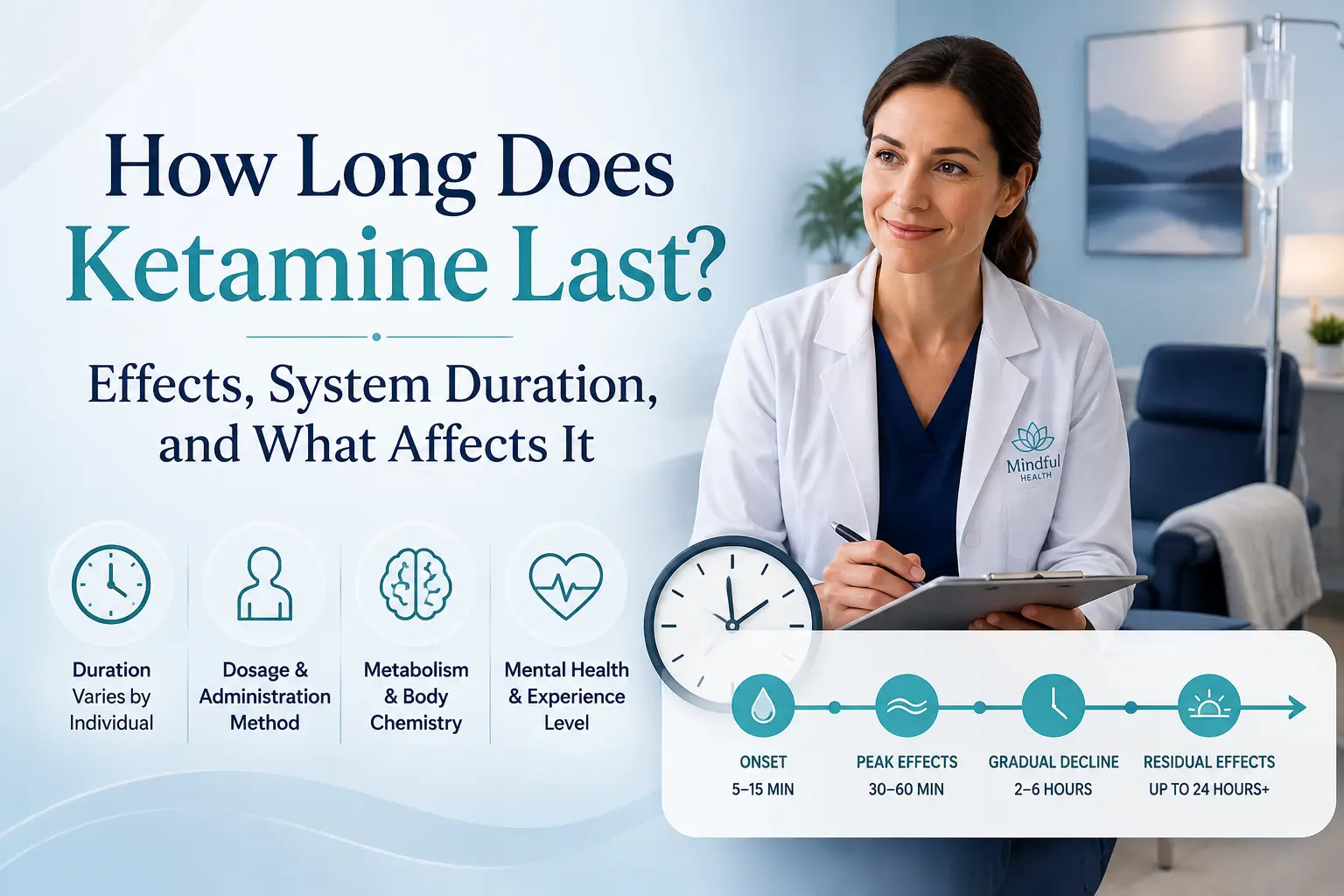
How long those effects last varies from person to person, and most providers recommend a series of sessions rather than a single treatment to build lasting results.
Integration afterward matters too.
Reflecting on the experience, whether through journaling or talking with a therapist, seems to help people carry the mental clarity from a session into their daily routines.
How AZ Wellness Center Approaches Ketamine Therapy for Focus and Mood
At AZ Wellness Center in Mesa, Arizona, ketamine therapy is never treated as a one-size-fits-all solution.
Every patient starts with a thorough consultation that looks at your symptoms, treatment history, and goals before anyone talks about whether ketamine makes sense for you.
Because ADHD so often shows up alongside depression, anxiety, and other mental wellness concerns, the evaluation also considers sleep quality, hormone balance, and stress levels rather than looking at attention symptoms in isolation.
That fuller picture helps determine whether ketamine, another approach, or a combination of treatments is the right fit.
If you have felt stuck cycling through medications that never quite worked, or you are managing ADHD alongside depression, anxiety, or PTSD that has not responded to standard care, a conversation with the team at AZ Wellness Center is a reasonable next step.
Every plan is personalized, medically supervised, and built around what your specific symptoms actually need.
FAQs: Does Ketamine Help With ADHD
Can ketamine help with ADHD-related brain fog or focus problems?
Some people report improved mental clarity and focus after ketamine therapy, particularly when their ADHD overlaps with depression or anxiety. This is based on early research and patient reports rather than large clinical trials, so results vary widely from person to person.
Can ketamine make ADHD symptoms worse?
Ketamine does not appear to directly worsen ADHD, but it can temporarily increase distractibility, restlessness, or emotional sensitivity in the hours after a session. These effects are typically short-lived and are one reason medical supervision matters.
How is ketamine different from Adderall or Vyvanse?
Stimulants like Adderall and Vyvanse raise dopamine and norepinephrine to improve focus quickly, usually within an hour. Ketamine works on the brain’s glutamate system instead, which researchers believe supports longer-term changes in brain connectivity rather than an immediate focus boost.
Who shouldn’t try ketamine therapy for ADHD-related symptoms?
People with uncontrolled high blood pressure, certain heart conditions, a history of psychosis, active substance misuse, or who are pregnant are generally not good candidates. A full medical evaluation should always come before any decision about ketamine therapy.
How long do the focus or mood effects of a session last?
This varies by person, but many people notice effects within hours to a few days after a session, and benefits often build with a series of treatments rather than a single visit. A provider can walk you through what to realistically expect based on your history.